

The Silent Crisis of Not Feeling
Here’s a question most of us can’t answer: What does your heartbeat feel like right now?
Not metaphorically. Literally. Can you sense it without putting your hand to your chest?
What about your breath? Is it shallow or deep? Your stomach? Hungry, full, or somewhere uncertain in between? The temperature of your hands? The tension in your jaw?
If you’re drawing a blank, you’re not alone. You’re experiencing what researchers call low interoceptive awareness, a diminished ability to sense what’s happening inside your body. And according to a growing body of research, we’re in the middle of an interoception crisis.
What Is Interoception (And Why Should You Care)?
Interoception is another sense, this one they didn’t teach you about in elementary school. While your five classic senses point outward (sight, sound, touch, taste, smell) and proprioception tells you where your body is in space, interoception is the ability to perceive internal body signals: your heartbeat, breath, digestion, temperature, pain, pleasure, tension, fatigue, hunger, thirst, and emotional states as they arise in the body.
It’s the difference between:
-
Knowing you’re stressed (cognitive) vs. feeling your shoulders tighten and your breath shorten (interoceptive)
-
Deciding you’re hungry because it’s noon vs. sensing genuine hunger cues from your stomach
-
Thinking “I should relax” vs. experiencing your nervous system downshift
Neuroscientist Dr. Bud Craig, who pioneered interoception research, discovered that interoceptive signals travel through a specific pathway to the insula, a brain region crucial for self-awareness, empathy, and emotional regulation. In other words, the better you can feel your body, the better you can navigate your inner and outer world.
The Interoception Decline: How We Lost Touch

So what happened? Why are so many of us walking around disconnected from our own internal landscape?
The Numbing Culture
We live in an anesthetic society. The modern lifestyle is designed to override body signals:
-
Caffeine to ignore fatigue
-
Alcohol to dampen anxiety, stress, and discomfort
-
Constant stimulation (screens, notifications, content) to avoid feeling boredom or difficult emotions
-
Busy-ness as a badge of honor, drowning out the body’s requests to rest
-
Convenience foods engineered to hijack natural satiety cues
A 2019 study in Psychosomatic Medicine found that chronic stress and trauma, which… look-around, significantly impair interoceptive accuracy. When your nervous system is chronically activated, it becomes harder to distinguish between true threat and false alarm, between hunger and anxiety, between tired and depressed.
The Alcohol Paradox
Here’s the irony: we often reach for alcohol to “relax” or “unwind,” but alcohol is a dissociative agent. It doesn’t help you arrive in your body, it helps you leave it.
As a depressant, alcohol:
-
Numbs physical sensations
-
Disrupts the body’s natural stress-response system
-
Interferes with REM sleep, preventing the body from processing emotions somatically
-
Creates a feedback loop: you feel worse, so you drink to feel less, so you feel even less connected to yourself
The next morning, the hangover isn’t just dehydration, it’s your body screaming to be noticed. But instead of listening, we caffeinate and power through. The cycle continues. I know. I ran this cycle for years.

The Body Knows: Why Interoception Matters
Low interoceptive awareness isn’t just uncomfortable, it has real consequences:
Mental Health: Studies link poor interoception to anxiety, depression, eating disorders, addiction, and alexithymia (inability to identify emotions). If you can’t feel what’s happening in your body, how can you know what you need?
Decision-Making: The “gut feeling” isn’t metaphorical. Research by neuroscientist Antonio Damasio shows that bodily sensations guide decision-making through what he calls “somatic markers.” People with better interoception make more advantageous choices.
Emotional Regulation: You can’t regulate an emotion you don’t feel arising. Interoception is the early-warning system that says, “Hey, tension is building” before you explode at your partner or shut down entirely.
Authentic Living: When you’re disconnected from body signals, you’re more susceptible to external influences, what you “should” want, feel, or do. Embodiment is the foundation of autonomy.
The Plot Twist: Adaptogens as a Gateway to Feeling
This is where the conversation gets interesting.
What if certain plant compounds, if used intentionally, could actually enhance interoceptive awareness rather than diminish it?
Enter adaptogens and nootropics: botanicals that don’t force a state but help your body respond more intelligently to stress. Unlike alcohol (which numbs) or stimulants (which override), adaptogens work with your physiology.
The Science of Somatic Attunement
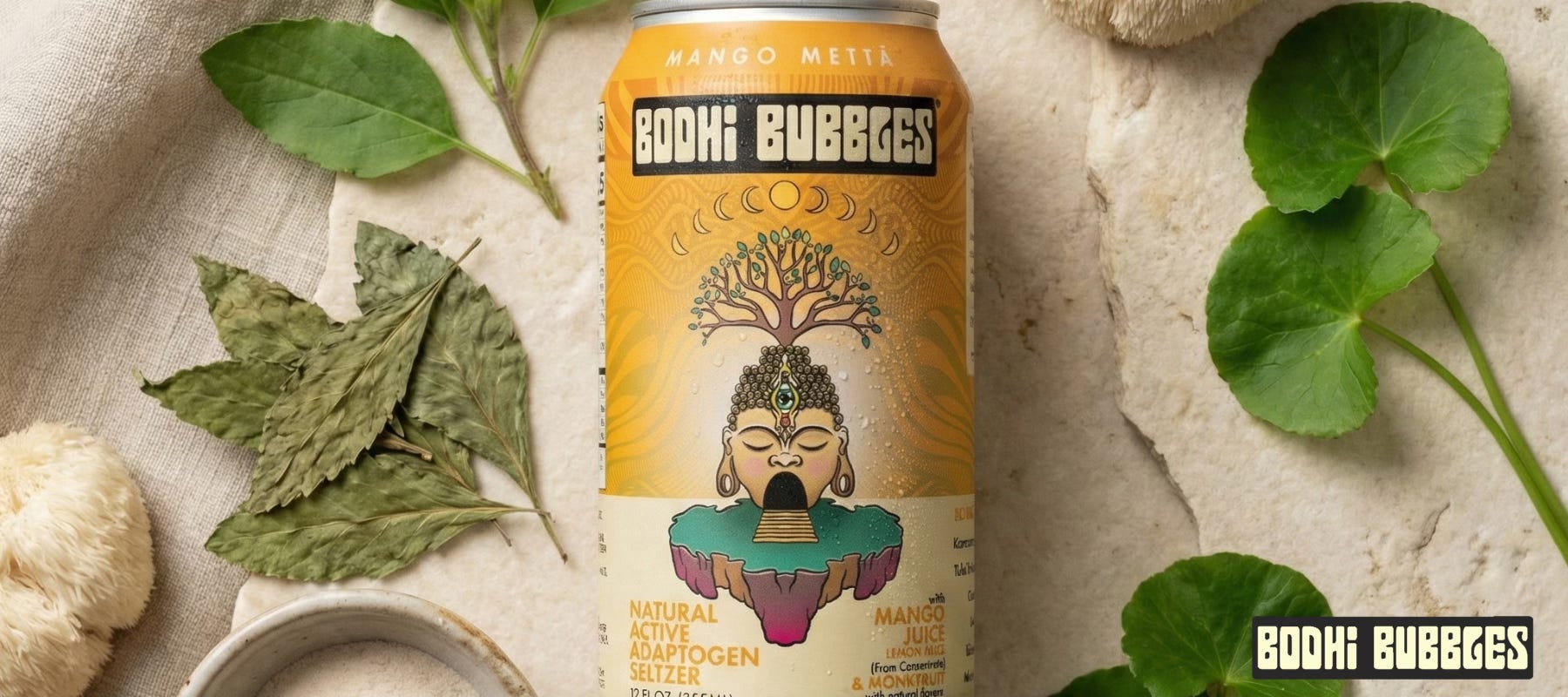
Let’s look at two key ingredients in Bodhi Bubbles and their relationship to embodiment:
Zembrin® (Sceletium tortuosum):
Used for centuries by indigenous Khoisan peoples of South Africa, Sceletium was traditionally taken before long hunts to enhance focus while maintaining calm, a state requiring acute body awareness. Modern research shows Zembrin modulates serotonin reuptake and PDE4 activity, supporting emotional regulation without sedation.
But here’s what matters for interoception: Zembrin doesn’t numb you out. Clinical studies show it reduces anxiety while improving cognitive flexibility. Users report feeling more “present” and “in their bodies” rather than dissociated. It’s the difference between checking out and dropping in.
Magtein® (Magnesium L-Threonate):
Most magnesium supplements don’t cross the blood-brain barrier effectively. Magtein does. Research from MIT shows it enhances synaptic density and supports neuroplasticity, meaning it is literally helping your brain rewire for better stress resilience.
From an interoceptive lens, magnesium is fascinating: it’s involved in over 300 enzymatic processes, including muscle relaxation and nervous system regulation. When your body has adequate magnesium, you can actually feel the difference,that unclenching of the jaw, the softening of the shoulders, the deepening of breath.
The key insight: These aren’t about achieving a “high” or escaping discomfort. They’re about creating the internal conditions where you can safely feel what’s happening in your body.
The Felt Sense: What Interoception Actually Feels Like

Let’s get practical. Here’s what cultivating interoception with adaptogens might look like:
20 minutes after drinking Bodhi Bubbles, you might notice:
-
Your shoulders dropping away from your ears (you didn’t realize they were raised)
-
Your breath shifting from shallow chest-breathing to deeper belly-breathing
-
A subtle warmth or tingling in the chest, your nervous system downregulating
-
The mental chatter quieting enough to hear what your body has been trying to tell you
-
A sense of “landing” a bit like you’ve been hovering slightly above yourself and just made contact
This is interoception in action. You’re not numb. You’re not “high.” You’re here.
Building Body Literacy: A Practice, Not a Product
Here’s the truth: no beverage—functional or otherwise—will magically restore interoception. But the right tools can create conditions for practice.
The Bodhi Ritual: Interoception Training
Try this:
Before opening the can:
-
Pause. Take three conscious breaths.
-
Body scan: Where are you holding tension? What sensations are present?
-
Set an intention: “I’m choosing to feel rather than flee.”
While drinking:
-
Slow down. Taste it. The carbonation, the fruit, the coolness.
-
Notice: What does your tongue sense? Your throat? Your stomach as you swallow?
-
Track: What happens in your chest, your shoulders, your face?
20 minutes later:
-
Check in. What’s different? What’s the same?
-
Can you feel your heartbeat? Your breath? The weight of your body in the chair?
-
Write it down. Build a vocabulary for your internal experience.
Over time, this isn’t just about the beverage, it’s about training your nervous system to trust that it’s safe to feel.
The Invitation: Come Home to Your Body
We’re not advocating for hypervigilance or obsessive body monitoring. Interoception isn’t about control, it’s a conversation. It’s learning to listen to the constant feedback loop between brain and body, thought and sensation, stress and rest.
The adaptogens in Bodhi Bubbles aren’t magic. They’re tools. They create a window of calm where feeling becomes possible. Where your nervous system can downshift enough to whisper instead of scream.
And here’s what we’re betting on:
Once you remember what it feels like to actually be in your body, not hovering above it in chronic stress, not numbed out of it in substance-induced fog, you won’t want to leave again.
You’ll start to notice:
-
The way your body knows before your mind does
-
The wisdom in your gut feelings
-
The relief of actually resting instead of just collapsing
-
The aliveness of sensation, even difficult ones
This is interoception nation. A generation choosing to feel rather than flee. To inhabit rather than escape. To trust the body as a source of intelligence, not just a machine to be optimized or a problem to be solved.

Welcome home.
Further Exploration
Try this week:
-
Set a phone reminder 3x per day: “What do I feel in my body right now?”
-
Replace one alcoholic drink with a functional beverage and track the difference
-
Practice the Bodhi Ritual above
-
Journal: What am I afraid to feel? What becomes possible when I let myself feel it?
Resources:
-
The Body Keeps the Score by Bessel van der Kolk
-
Accessing the Healing Power of the Vagus Nerve by Stanley Rosenberg
-
Somatic Experiencing practitioners (somaticexperiencing.com)
These statements have not been evaluated by the Food and Drug Administration. This product is not intended to diagnose, treat, cure, or prevent any disease. Bodhi Bubbles contains Zembrin® and Magtein®, clinically studied botanicals to support calm, focus, and presence. Because feeling your body isn’t about escaping it—it’s about finally, fully landing in it.
Ready to practice embodiment? [Shop Bodhi Bubbles →]
